Peter Brandon
ピーター•ブランドン
Resources:
None at Present
Options:
Page is under Construction
_____
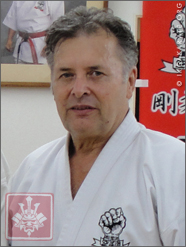
Peter Brandon Hanshi stands among the most influential figures in the development and expansion of Gōjū-kai Karate-dō throughout South Africa and the African continent. A pioneer, teacher, administrator, and international leader, his decades of service have helped establish Africa as a significant and respected presence within the worldwide Gōjū-kai family.
His karate journey began in South Africa under some of the country's earliest and most influential karate pioneers. Among these was Shihan Len Barnes, widely regarded as one of the fathers of karate in South Africa. With a background in boxing, judo, and Kempo, Barnes became an important figure in the early development of Kyokushinkai karate in Cape Town.
In 1963, a young Peter Brandon joined Len Barnes' Kyokushinkai group. Barnes quickly recognized his potential and took a particular interest in his development. Under the guidance of Shihan Len Barnes and the demanding tutelage of Sensei Eddie Cave, Brandon developed the technical skill, discipline, and fighting spirit that would become hallmarks of his karate career. By 1969, he had attained the rank of Shodan.
The influence of his early teachers remained with him throughout his life. From Len Barnes came a deep respect for karate tradition, personal character, dignity, and proper conduct. Eddie Cave brought another dimension: an uncompromising approach to physical and mental conditioning. Training could include early mornings in Cape Town's icy waters and sessions on frost-covered grass, challenging students to discover capabilities beyond what they believed possible.
Adversity and the Karate-dō Spirit
In 1969, Peter Brandon's karate future was suddenly placed in jeopardy when he was involved in a serious motor vehicle accident that caused severe injuries to his legs. His doctors predicted permanent partial disability and believed that his days of karate training had come to an end.
Brandon refused to allow that prognosis to determine his future.
After spending approximately three months in hospital, he began the long process of recovery, gradually returning to karate one step at a time. His perseverance became a powerful demonstration of the spirit that karate-dō had already instilled within him. Remarkably, only two years after the accident, he had recovered sufficiently to compete as a member of the Western Province karate team.
The Journey to Gōjū-kai
In 1974, Peter Brandon and Eddie Cave left Kyokushinkai and began pursuing Gōjū-ryū Karate-dō. Brandon subsequently joined Gōjū-kai, which had been introduced into South Africa in 1971 through Sensei Leo Lipinski.
Eddie Cave also became associated with Gōjū-kai and, following training in Japan, was awarded the rank of Godan and appointed head of Gōjū-kai South Africa. When Cave later moved into kickboxing, Peter Brandon was elected to lead Gōjū-kai in South Africa.
Under his leadership, the organization continued to develop and expand, particularly throughout southern Africa. What began as the work of a relatively small number of dedicated karate-ka gradually developed into a multigenerational Gōjū-kai family extending across the continent.
Leadership Under Kaiso Gōgen Yamaguchi
A defining moment in Peter Brandon's karate career came through his relationship with Kaiso Gōgen Yamaguchi, founder of the International Karate-dō Gōjū-kai Association (IKGA).
In 1987, Kaiso Gōgen Yamaguchi personally appointed Peter Brandon as President and Chief Instructor of the All South African Karate-dō Gōjū-kai. The following year, his responsibilities expanded when he was appointed All Africa President and Chief Instructor.
His growing international standing was further recognized in 1991, when he was appointed as one of the Vice Presidents of the International Karate-dō Gōjū-kai Association (IKGA)
These appointments began what would become decades of close and loyal service alongside the Yamaguchi family and the international Gōjū-kai organization. Through changing generations of leadership, Brandon remained committed to the principles, traditions, and organizational structure established by Kaiso Gōgen Yamaguchi.
Leadership Under Saiko-Shihan Goshi Yamaguchi
Viewed in a message from Saiko-Shihan: "I have always had respect for Peter Brandon Hanshi who is responsible for the promotion and building of a large and successful following on the African Continent.
Peter Brandon Hanshi is not only a president of Africa but also IKGA Block director of Africa, who always helps the President of the IKGA and devotes himself to our organization for higher fulfillment. Nowadays, Karate has become popular; there are no boundaries for practicing Karate. Many Karate events such as tournaments, seminars and demonstrations are being held every day around the world.
Since 1990 when I became the president of IKGA, we have held [eight] World/[Global] Championships plus International Seminars. At every event held, Brandon Hanshi has always been present, bringing many other members with him who have contributed to the success of the events. I always think without Brandon Hanshi's dedication, such events may not have been the success they were."
Building Gōjū-kai in Africa
Perhaps Peter Brandon Hanshi's greatest legacy can be seen not simply in his personal accomplishments, but in the generations of karate-ka who have followed him.
Over decades of leadership, he helped establish a strong organizational structure and a sense of belonging among Gōjū-kai practitioners throughout Africa. Today, his influence extends through multiple generations of students, instructors, and senior teachers, demonstrating the lasting effect of a lifetime devoted to teaching and developing others.
His vision has always extended beyond technical karate. Central to his leadership has been respect for hierarchy, loyalty to one's teachers, preservation of history, disciplined training, and the understanding that each generation carries a responsibility to prepare the generation that follows.
The strength of African Gōjū-kai was demonstrated on the international stage when South Africa hosted one of the largest and most significant IKGA World Championships in the organization's history—an achievement that reflected decades of development and cooperation throughout the continent.
Leadership Beyond Gōjū-kai
Peter Brandon Hanshi's influence has also extended into the broader international karate community. In addition to his leadership within Gōjū-kai, he has served as a coach of the South African All-Styles Senior Team and has held senior technical responsibilities within African karate.
He was elected Chairperson of the UFAK Technical Commission for Africa, serving within the continental structure associated with the World Karate Federation (WKF). These responsibilities further demonstrated the respect he earned beyond the boundaries of his own karate organization.
Peter Brandon Hanshi attained the senior rank of 8th Dan, representing more than simply technical achievement. It reflects a lifetime devoted to training, teaching, organizational leadership, and the development of Gōjū-kai Karate-dō across Africa.
Carrying the Legacy Forward
At the heart of Peter Brandon Hanshi's philosophy is a simple principle: life gives back what we put into it.
His own journey illustrates that conviction—from the demanding training of his youth and an accident that threatened to end his karate career, to becoming one of the senior international leaders of Gōjū-kai and helping guide generations of practitioners across an entire continent.
For Hanshi Brandon, preserving Gōjū-kai means more than maintaining techniques or organizational structures. It means preserving the history, values, relationships, and spirit handed down from teacher to student.
His loyalty to the Yamaguchi family and to the legacy of Kaiso Gōgen Yamaguchi has remained central throughout his leadership. He has consistently expressed confidence that the future of Gōjū-kai rests in honoring that heritage while continuing to learn, develop, and prepare future generations under the leadership of the Yamaguchi family.
From student to competitor, from instructor to national leader, and ultimately to one of the senior international figures of Gōjū-kai, Peter Brandon Hanshi's life in karate represents more than six decades of perseverance, loyalty, leadership, and service.
The tradition continues. The next generation carries it forward.
"Goju-kai; It's a Matter of Pride" - Peter Brandon, Hanshi


